
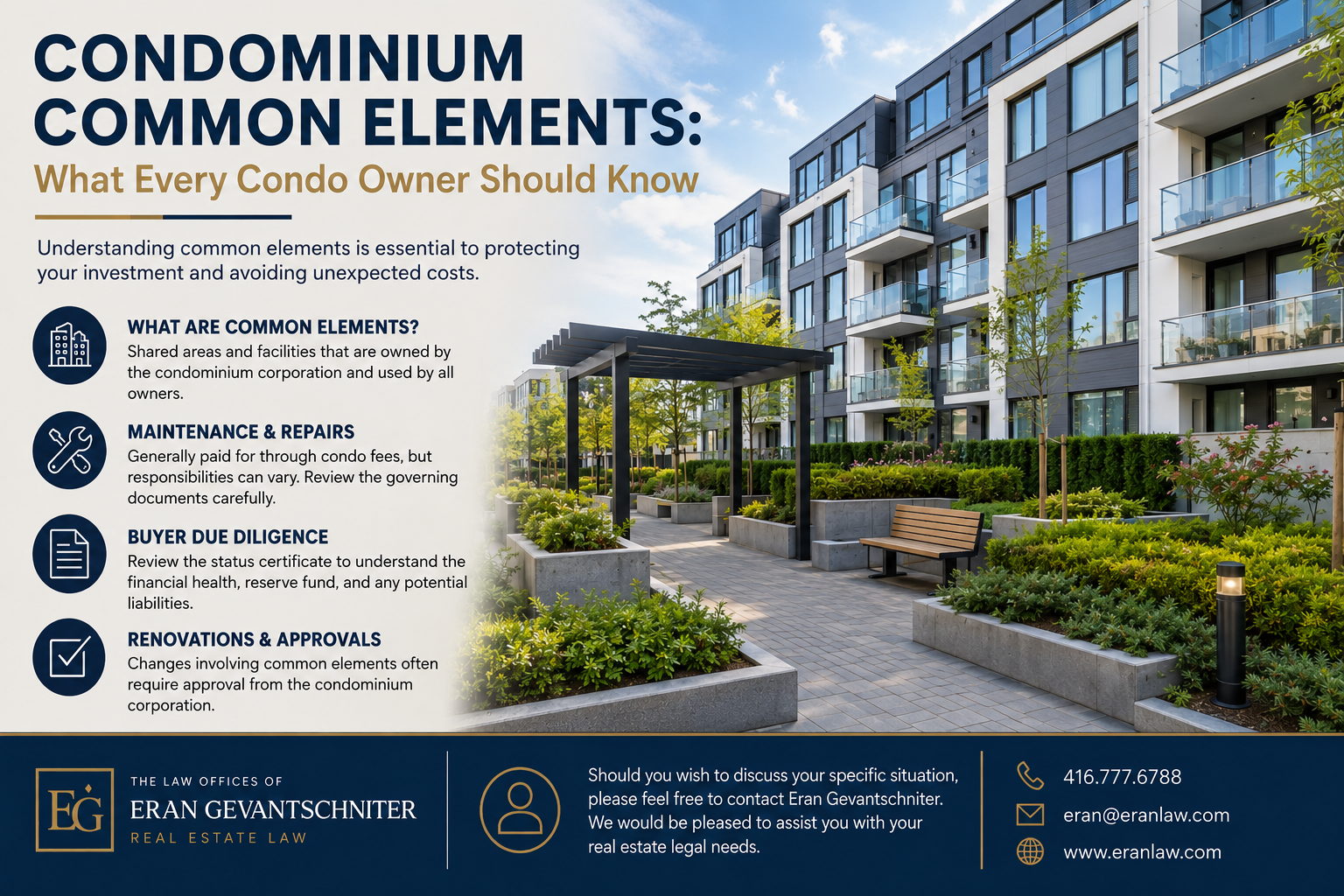
Purchasing a condominium is often an attractive option for homeowners looking for convenience, affordability, and reduced maintenance responsibilities. However, one aspect of condominium ownership that is frequently misunderstood is the concept of common elements. As a real estate lawyer, I regularly encounter questions from buyers and owners regarding what common elements are, who is responsible for maintaining them, and how they can impact ownership rights and obligations.
What Are Common Elements?
In a condominium, ownership is divided between the individual unit and the common elements. While you own your unit exclusively, the common elements are generally shared by all unit owners within the condominium corporation.
Common elements typically include areas such as:
- Hallways and lobbies
- Elevators
- Parking garages
- Roofs and exterior walls
- Landscaping and gardens
- Recreational facilities such as gyms, pools, and party rooms
- Mechanical systems serving multiple units
Each condominium corporation’s declaration and governing documents define exactly what constitutes a common element.
Exclusive Use Common Elements
Some common elements are designated for the exclusive use of a particular unit owner. Examples often include balconies, terraces, parking spaces, and storage lockers.
Although these areas may be reserved for your use, they are not necessarily owned by you in the same way as your unit. The condominium declaration will specify maintenance and repair responsibilities, which can vary from one condominium corporation to another.
Who Pays for Maintenance and Repairs?
The cost of maintaining and repairing common elements is generally funded through the condominium corporation’s operating budget, which is supported by monthly condominium fees paid by all owners.
However, not all repairs are treated equally. Certain costs may be allocated differently depending on the condominium’s governing documents. In some cases, owners may be responsible for damage they cause to common elements or for maintaining exclusive use common elements.
Reviewing the declaration, by-laws, and rules is essential to understanding these obligations before purchasing a condominium.
Why Common Elements Matter When Buying a Condo
Buyers often focus on the unit itself and overlook the condition of the common elements. However, the state of the common elements can have a significant impact on future costs and property values.
When purchasing a condominium, it is important to review the condominium corporation’s status certificate. This document provides valuable information regarding:
- The financial health of the condominium corporation
- The reserve fund balance
- Pending legal proceedings
- Special assessments
- Outstanding compliance issues
A poorly funded reserve fund or deferred maintenance may result in increased condominium fees or special assessments in the future.
Renovations and Common Elements
Owners should also be aware that modifications involving common elements often require approval from the condominium corporation. This may include installing flooring, enclosing balconies, altering windows, or making changes to plumbing and electrical systems that affect common property.
Failure to obtain the necessary approvals can result in legal disputes, compliance orders, and unexpected costs.
Final Thoughts
Condominium ownership offers many benefits, but it also comes with unique legal rights and responsibilities. Understanding common elements is an important part of protecting your investment and avoiding surprises down the road.
Before purchasing a condominium, or if you are planning renovations to your existing unit, it is advisable to seek legal advice and carefully review the condominium corporation’s governing documents. A clear understanding of common elements today can help prevent costly issues tomorrow.
If you are purchasing a condominium, selling a condominium unit, or simply have questions regarding your rights and obligations as a condominium owner, it is important to obtain proper legal advice. Understanding the condominium’s declaration, by-laws, rules, and common element obligations can help you avoid costly surprises in the future. Should you wish to discuss your specific situation, please feel free to contact Eran Gevantschniter at The Law Offices of Eran Gevantschniter. We would be pleased to assist you with your real estate legal needs
This article is intended for general information purposes only and should not be considered legal advice. For advice regarding your specific situation, please consult a qualified real estate lawyer.
Image created by ChatGPT